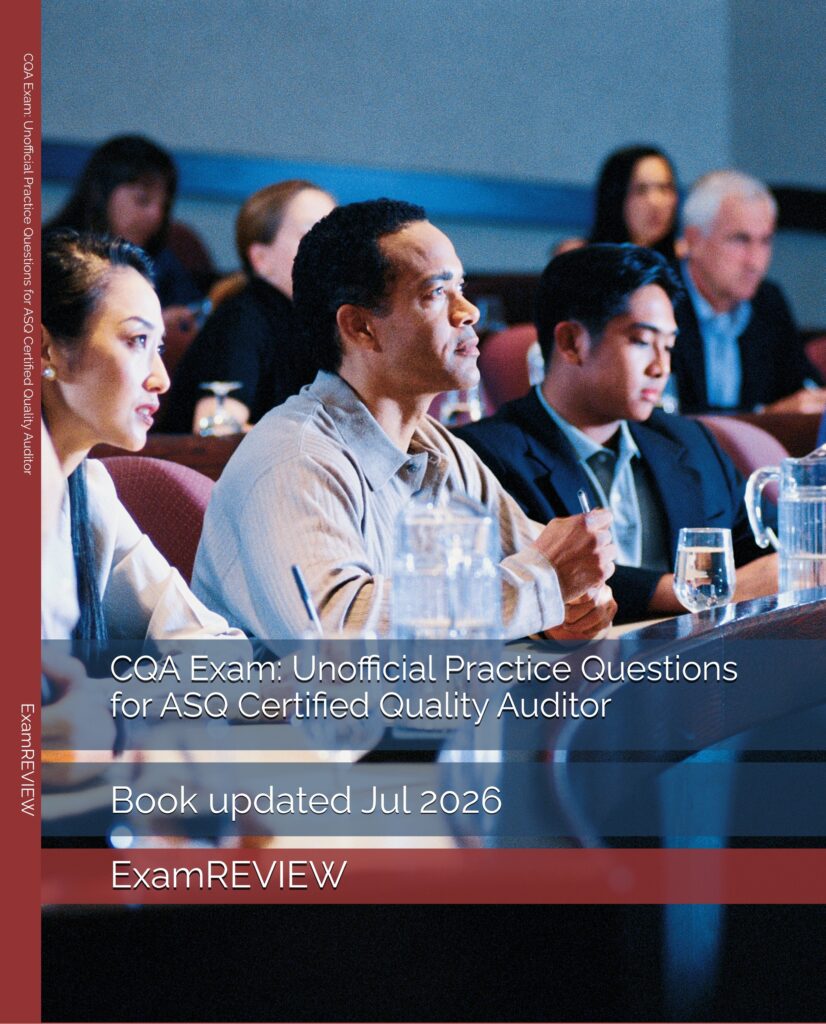
Book updated Jul 2026.
The Certified Quality Auditor CQA exam tests your knowledge on the standards and principles of auditing as well as the techniques of examining, questioning, evaluating and reporting to determine a quality system’s adequacy and deficiencies. An understanding of the elements of a quality system and the related criteria of industrial management, quality evaluation and control systems is equally emphasized.
Based on ASQ’s official documentation, the Certified Quality Auditor exam has been updated with a new 2026 Body of Knowledge, which took effect starting with the April 2026 examination window, and this update represents a significant shift in focus to align the certification with modern auditing practices. The core content of the 2026 Body of Knowledge has been updated to reflect the evolving landscape of quality auditing, specifically incorporating new technologies and methodologies that have emerged since the previous 2019 version. Audit formats now explicitly include remote and hybrid audits, reflecting the shift toward flexible, technology-driven auditing practices, and the audit planning process now requires evaluation of on-site, remote, or hybrid formats. The scope of audits has been expanded to include the assessment of cybersecurity risks, and auditors must now consider data integrity, electronic documents and records, and computerized systems as part of their auditing processes. A new subtopic on audit credibility has been added, and the cognitive level for legal consequences has been increased from apply to analyze, indicating a greater emphasis on understanding the potential legal and financial impacts of improper auditor actions. The roles and responsibilities of audit participants have been clarified to include observers and other relevant stakeholders, and the list of pre-audit information has been expanded to include gap assessments, while desk audits are now defined to include questionnaire-based assessments and the concept of quality agreements has been added to audit criteria.
We create these self-practice test questions module referencing the concepts and principles currently valid in the exam. Each question comes with an answer and a short explanation which aids you in seeking further study information. We want to make sure these questions are tough enough to really test your readiness and draw your focus to the weak areas. Think of these as challenges presented to you so to assess your comprehension of the subject matters. The goal is to reinforce learning, to validate successful transference of knowledge and to identify areas of weakness that require remediation.